

Welcome to the diamond of sports! But baseball is more than a sport, it’s a culture. From the crack of the bat to the silent standoff between pitcher and batter, every moment on the diamond is governed by a rich framework of official regulations, traditions, and unspoken agreements that have been refined over nearly 180 years.
Whether you are coaching your first youth team, managing field preparation for a competitive league, or just want to follow along better the next time you watch, getting familiar with the rules of baseball can make the experience that much richer.
TURF TANK TIP:
Have you ever wondered how baseball fields are painted? Check the world’s most efficient line marking tool here.

Baseball – Everything you need to know before the first pitch:
2 teams
9 players each, one bat, one field
Score runs
By hitting the ball and making it all the way around the bases – 1st, 2nd, 3rd, and back to home plate
Winning
Whichever team has scored the most runs after 9 innings wins the game
9 innings
Each team bats until the other team gets 3 outs, then they swap (that’s one full inning)
3 strikes = out
4 balls = walk to first base

10 Basic Rules of Baseball
- Nine Innings:
A standard game lasts nine innings, each split into a top (visitors bat) and bottom (home team bats). - Three Outs to End a Half-Inning:
Each team gets three outs per half-inning before switching between offense and defense. - Offense vs Defense:
One team bats (offense) while the other team fields (defense). They switch after three outs. - The Playing Field:
The field features a diamond shape with four bases: first, second, third and home plate, which runners must touch in order after the ball is hit. The bases are 90 feet apart. - Scoring a Run:
A run is scored when a baserunner successfully rounds all four bases and touches home plate without being put out. - Pitcher vs Batter:
The game centers on the matchup between pitcher and batter, where the pitcher throws and the batter tries to hit. - Strikes and Strikeouts:
A batter is allowed three strikes. A strike happens when a batter swings and misses, hits the ball out of bounds (foul ball), or doesn’t swing at a pitch thrown inside the “strike zone.” If a batter gets 3 strikes, they are out (a strikeout). - Balls and Walks:
If the pitcher throws a pitch outside the strike zone and the batter does not swing, it is called a “ball.” If the pitcher throws 4 balls during a single at-bat, the batter is awarded a free pass to first base, known as a walk. - Fair vs. Foul Balls:
For a hit to be in play, the ball must be hit into “fair territory” which is the V-shaped area extending from home plate out past first and third base. If the ball lands outside these lines, it is a “foul ball” and play stops. - Winning the Game:
fter 9 innings, the team with more runs wins. If tied, extra innings are played.
A Brief History: Who Wrote the Rules of Baseball?
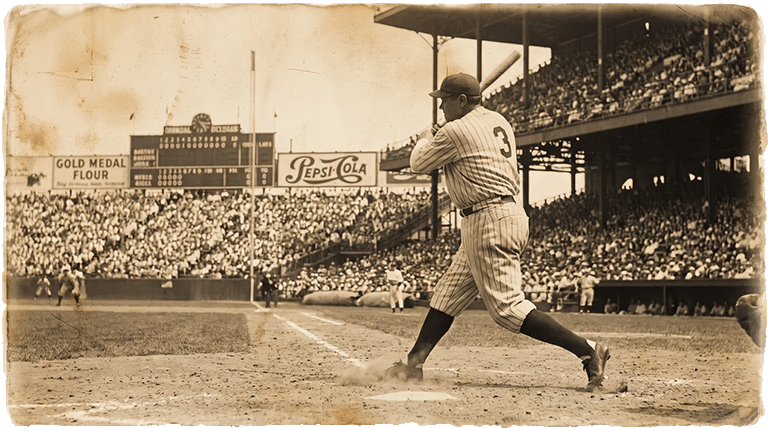
Baseball wasn’t invented by one person on a specific date, but it is a game that has been played since the 18th century. The modern baseball game we know from today was formalized in 1845 by sportsman Alexander Cartwright, who also founded Knickerbocker Baseball Club in New York. They introduced the three-strike strikeout, three outs per half-inning, the diamond infield layout, and the 90-foot baseline. These were radical standardizations at a time when bat-and-ball games varied wildly from town to town. That fixed structure is what made fair, competitive baseball possible.
While their rules from 1845 are considered the foundation of the modern game, baseball’s popularity grew throughout the 19th century, with the first professional team, the Cincinnati Red Stockings, formed in 1869.
The Baseball Rules in Action
Unlike most sports, baseball has no game clock. A professional baseball game lasts for nine innings. Each inning is divided into two halves (the top and the bottom), giving both teams a turn to play offense and defense.
When a batter enters the box, they are engaged in a duel with the pitcher. If the batter hits a ball onto the ground, they must reach first base before a fielder receives the thrown ball there. If the ball is hit into the air and caught before it touches the ground, the batter is out immediately. That mix of power, speed, and precision is what keeps fans coming back.
Beyond the Book:
The Unwritten Rules of Baseball
Baseball is famous for its etiquette. While not found in any official manual, the unwritten rules are strictly followed by pros to show respect for the game. For example:
- Don’t celebrate too much after a big hit – it can come across as showing off and disrespecting the pitcher
- If the other team’s pitcher is having a near-perfect game (a “no-hitter”), don’t try to sneak in an easy hit (a bunt) late in the game just to break it up
- When walking back to the dugout, go around the pitcher’s mound rather than across it, out of respect for the pitcher’s space on the field
Evolution of the Game: Banana Baseball
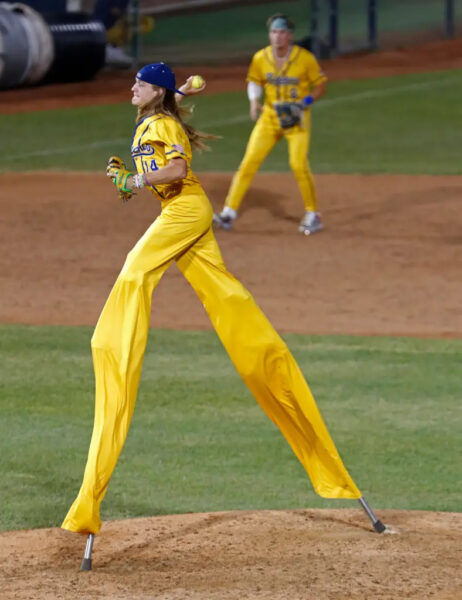
While the rules of baseball have remained relatively stable for over a century, new variations are capturing the world’s attention. Jesse Colo, the owner of Savannah Bananas, dreamt of making America’s pastime livelier and a bit more fun with dancing, crazy sketches and entertainment for the fans from the very first moment they enter the stadium. This is known as Banana Ball (often called banana baseball), played by the Savannah Bananas and only four teams in the world compete in Banana Ball.
This format introduces fan-friendly rules, including a two-hour time limit, no bunting, and most famously if a fan catches a foul ball, the batter is out! Banana Baseball is a testament to how the rules of baseball can be adapted to keep the sport fresh, entertaining, and accessible to a digital-first generation. Whether you are playing by the strict Knickerbocker standards or the chaotic fun of Banana Baseball, the core mission remains the same: hit the ball, run the bases, and have fun.
It’s basically a circus on a baseball field and you never know what the teams in this league will do once they take the field.
Why the Rules Matter
At the end of the day, whether you are strictly following the rules of baseball established centuries ago or leaning into the high-energy chaos of banana baseball, the basic rules of baseball serve a single purpose: maintaining the integrity of the sport.
Ever since those first rules were drafted, baseball has balanced tradition with evolution. The rulebook provides a framework, but it is the skill of the players and the strategy of the coaches that bring the game to life.