

The FIFA World Cup is the top international soccer tournament in the world, bringing together the best men’s national teams every four years to compete for the sport’s highest honor. Launched in 1930, it has grown into a global event watched by over half the world’s population. The upcoming 2026 edition will be the largest tournament in history, taking place across 16 stadiums in the United States, Canada, and Mexico from June 11 to July 19, 2026.
TURF TANK TIP:
Have you ever wondered how sports teams paint their fields? Check the world’s most efficient line marking tool here.

A Brief History of the Tournament
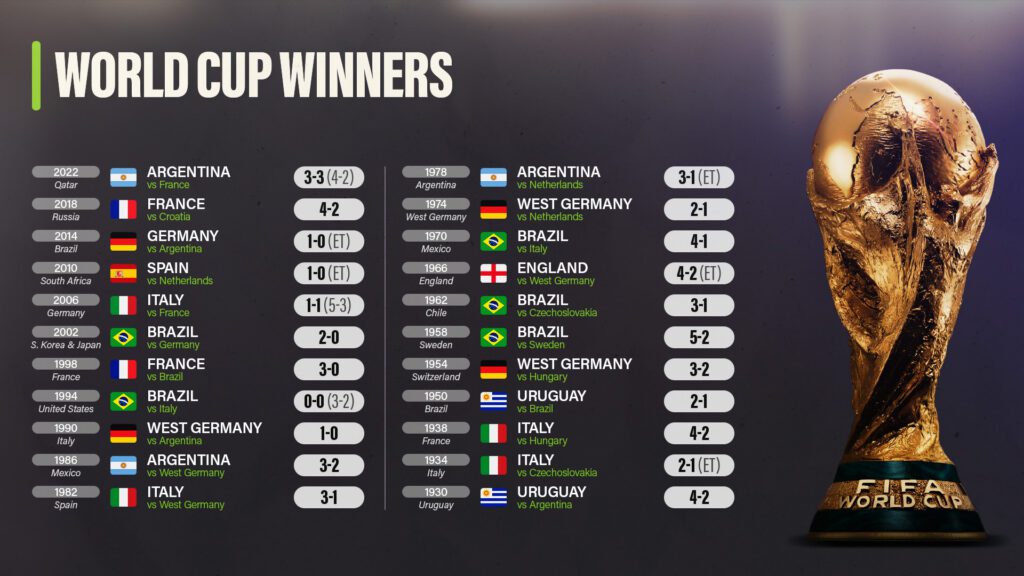
The first FIFA World Cup was held in Uruguay in 1930, with the host nation winning the title. The tournament was skipped in 1942 and 1946 due to World War II, but grew enormously in popularity in the decades that followed. The 1994 tournament, hosted in the United States, sparked major growth in American soccer and helped pave the way for leagues like Major League Soccer (MLS).
Brazil leads all nations with five World Cup titles (1958, 1962, 1970, 1994, and 2002). For the U.S. Men’s National Team (USMNT), their best-ever finish came at the very first tournament in 1930, where they reached the semifinals and placed third. In the modern era, their strongest result was reaching the quarterfinals in 2002.
How the tournament works
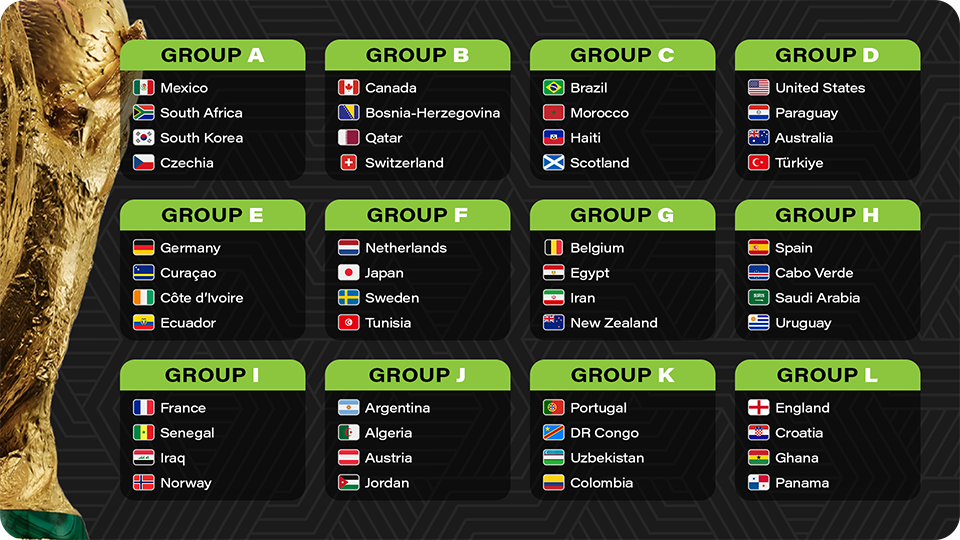
The 2026 World Cup introduces a major format change, expanding the field from 32 to 48 teams. These teams are split into 12 groups of four, with each team playing three group-stage matches. The top two teams from each group, plus the eight best third-place finishers, advance to a new Round of 32 knockout stage. From there, teams continue through the quarterfinals, semifinals, and the final.
This expansion brings the total number of matches to 104 – a 63% increase over the 64 matches played at the 2022 World Cup – making the 2026 tournament the longest in the event’s history at 39 days.
Surprising World Cup Facts
The 1930 Final Ball Dispute:
The drama of the very first World Cup Final wasn’t about a walkout – it was about the ball. Uruguay and Argentina couldn’t agree on which ball to use, so FIFA stepped in and ordered Argentina’s ball to be used in the first half, and Uruguay’s in the second. Uruguay went on to win 4-2.
Biggest Upset in Tournament History:
In 1950, a semi-professional U.S. squad shocked a heavily favored England team by winning 1-0. The odds of a U.S. victory had been set at 1,000-to-1 before the match.
The “MVP” Is Called the Golden Ball:
FIFA does not use a fan-voted MVP award. Instead, the FIFA Technical Study Group presents the “Golden Ball” to the best overall player of the tournament. The top scorer receives the “Golden Boot.”
2026 Tournament: Dates, Stadiums & U.S. Spotlight
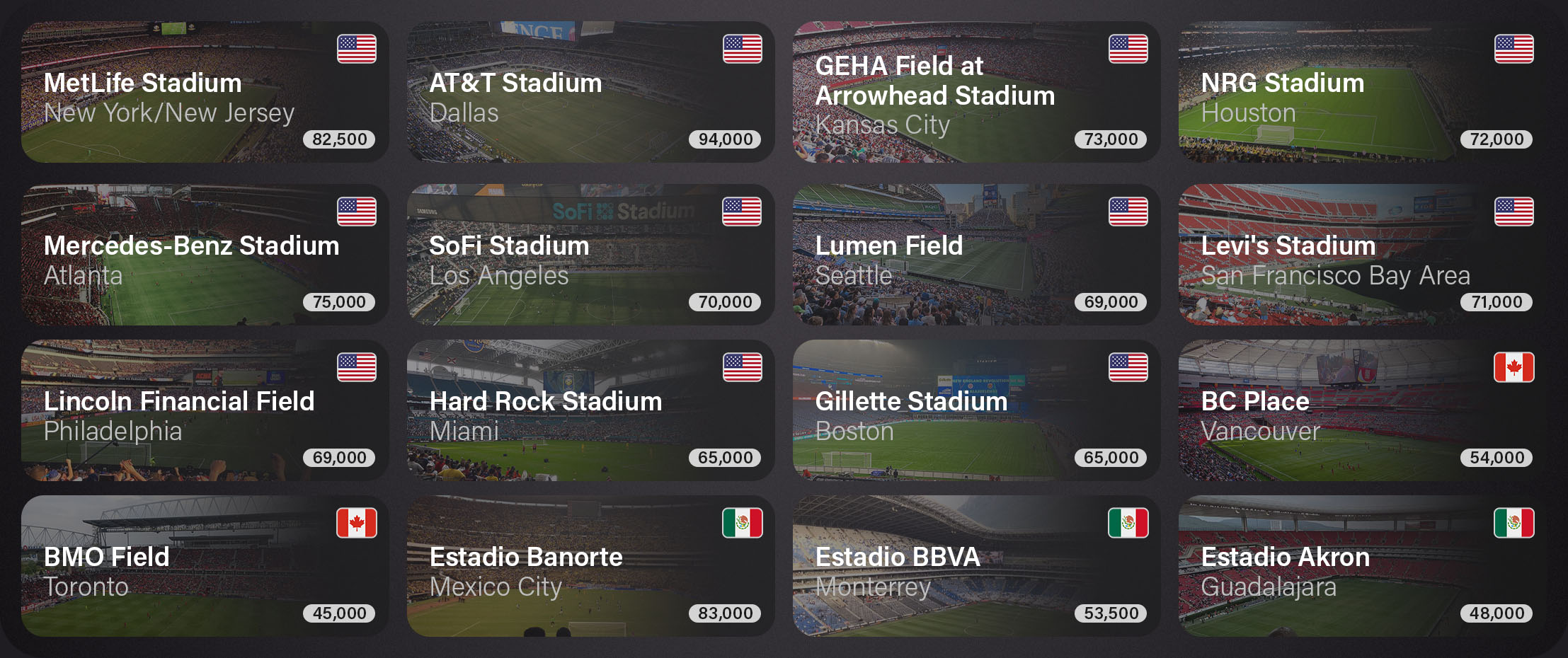
The opening match takes place on June 11 at Mexico City’s Estadio Azteca – officially called “Mexico City Stadium” for the tournament. The final will be held on July 19 at New York New Jersey Stadium (MetLife Stadium), which seats over 82,500 fans.
The United States will host the majority of matches across 11 stadiums. Key venues are listed below:
Qualification Paths
The three host nations – the USA, Canada, and Mexico – qualify automatically. The expanded 48-team tournament allocates spots across every major soccer region worldwide: Europe (UEFA) receives the most with 16 spots, followed by Africa (CAF) with 9, Asia (AFC) with 8, North & Central America and the Caribbean (CONCACAF) with 6, South America (CONMEBOL) with 6, and Oceania (OFC) with 1. The final 2 spots are decided through intercontinental playoff matches, where teams from different regions compete for the last places in the tournament. This broad allocation gives more countries than ever a realistic shot at competing on soccer’s biggest stage.
Field Standards and FIFA Regulations
World-class soccer requires precise field dimensions and careful maintenance. Under FIFA’s rules, all World Cup fields must measure exactly 344 feet (105 meters) long by 223 feet (68 meters) wide. Field markings are strictly regulated: the center circle must have a radius of exactly 30 feet (9.15 meters), the penalty box must measure 54 feet by 132 feet (16.5 meters by 40.3 meters), and all boundary lines must be the same width – no wider than 5 inches (12 centimeters).
Because FIFA prohibits artificial turf for World Cup matches, large U.S. stadiums must fully convert their NFL playing surfaces. However, natural grass alone cannot hold up to 8+ games over 39 days in enclosed stadium environments. To address this, FIFA uses a hybrid grass system – such as SISGrass – made of 95% natural grass reinforced by millions of synthetic polyethylene fibers stitched up to 7 inches (180mm) deep into the soil. Fields are tested for specific conditions including grass height of 1–1.1 inches (23–28mm), ball roll distance of 13–26 feet (4–8 meters), and surface hardness to ensure safe play and consistent ball performance.
FAQ
Frequently Asked Questions
The FIFA World Cup is the top international soccer championship in the world. The best men’s national teams compete every four years for the title of world champion.
FIFA World Cup 2026 runs from June 11 to July 19, 2026. It is co-hosted across the USA (11 cities), Mexico (3 cities), and Canada (2 cities).
The 2026 edition expands the field from 32 to 48 national teams – the largest in World Cup history.
The World Cup 2026 final will be held at MetLife Stadium in East Rutherford, NJ, officially known as “New York New Jersey Stadium” during the tournament.
Brazil leads with 5 World Cup titles. Germany and Italy each have 4 championships.