


“It’s spot on every time. Once you get shown the first time how to do it, it’s the same thing over and over.”


James Antoon
Field Manager



Taking care of your natural grass field is no small task. Whether it’s a professional game field or a practice field, keeping it in top shape and safe for players takes a lot of time and effort. That’s where we come in. Turf Tank is here to make your job easier by saving you countless hours on line marking so you can focus on what matters most: Maintaining a great field for your players.
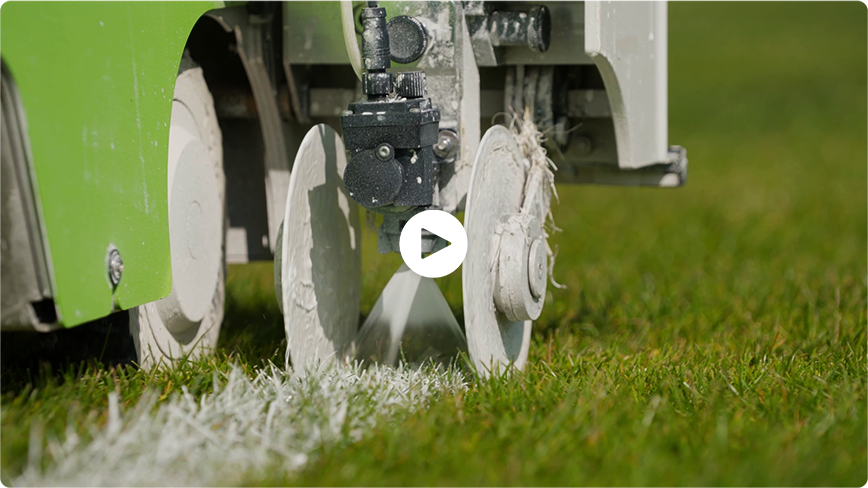
Have you taken a closer look at how you’re currently maintaining your field? Are there ways to improve without making a big investment right away? With Turf Tank, you don’t need to think about switching to artificial turf to save time. The robot makes line marking fast and easy, giving you the freedom to tackle other maintenance tasks, even during the busiest seasons.
It doesn’t matter if your natural grass field is perfectly level or has a few bumpy spots. Turf Tank can still deliver crisp, straight, and professional lines every time. You’ll always get a field that’s ready for play and looks great.
Using our robot, you can take back your time, focus on what your field needs, and keep everything running smoothly. Let us help you keep your natural grass field at its best all season long.
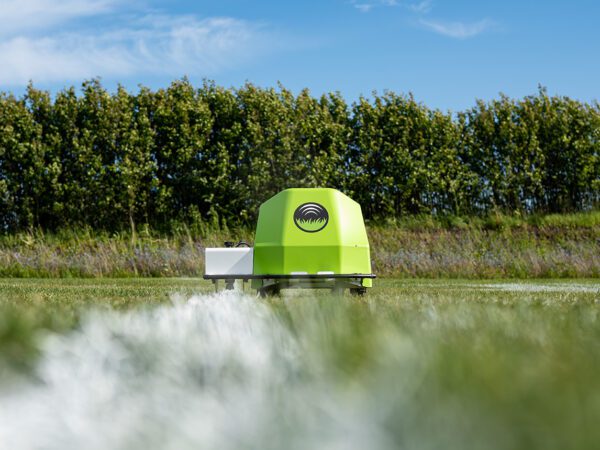

Bermudagrass works best in warm areas. It’s tough and can handle hot, dry weather. Football stadiums in the southern United States often use this grass. Facts about bermudagrass:

Kentucky Bluegrass is perfect for cooler places. It looks green and healthy, and it handles cold well. Sports fields in northern areas like this grass because:

Perennial Ryegrass is a great option for cooler climates. It grows quickly and looks nice, which is why it’s popular for soccer and rugby fields. This grass is a favorite because:

The right choice depends on your local weather, the sport, and how much time you can spend on field maintenance. For example, the most common types of grass in Florida for sports fields are Bimini grass and Bermuda grass, whereas the most common types of grass in Texas for sports fields are:
Bermudagrass

Buffalograss

Centipedegrass

Seashore Paspalum

St. Augustinegrass

Zoysiagrass

Annual Ryegrass

Fine Fescue

Kentucky Bluegrass

Perennial Ryegrass

Tall Fescue

Do you want to take the stress out of field painting?
Learn more about what our customers think about the Turf Tank line marking robot.


















When choosing grass for sports fields, consider what the grass needs to handle. Different sports affect the grass differently. The environment where your field is located also has an effect on the grass type you should choose. Again, the time it takes to maintain the grass also plays a role.
Football and rugby fields need grass that can take a lot of beating. Players run, tackle, and slide, which tears up the ground. Therefore, for these types of fields, you want grass that grows back quickly and stays strong.
The perfect grass for you and your field depends on a few things:
Each type of grass works in different places. What grows well in hot, dry areas might not work in cool, wet places. Some grass types require extensive care, while others are easier to manage.
When it comes to building and maintaining sports fields, one big debate has lasted for years: natural grass or artificial turf. Both options have pros and cons, which can make the decision tough for sports teams, facility managers, and others in charge. Choosing between natural grass and artificial turf means carefully considering the benefits and drawbacks of each option.
Artificial turf is very durable and can withstand a lot of use without needing rest. It’s great for fields that are used all year round, but it’s more expensive to install and maintain. It also has some environmental concerns, such as waste and chemicals.
Natural grass, on the other hand, is better for the environment and can last a long time if maintained properly. However, it requires more maintenance, such as watering and fertilizing, and it needs time to recover after heavy use or bad weather. Natural grass can support many games in a season, but it might not be as tough for year-round use.
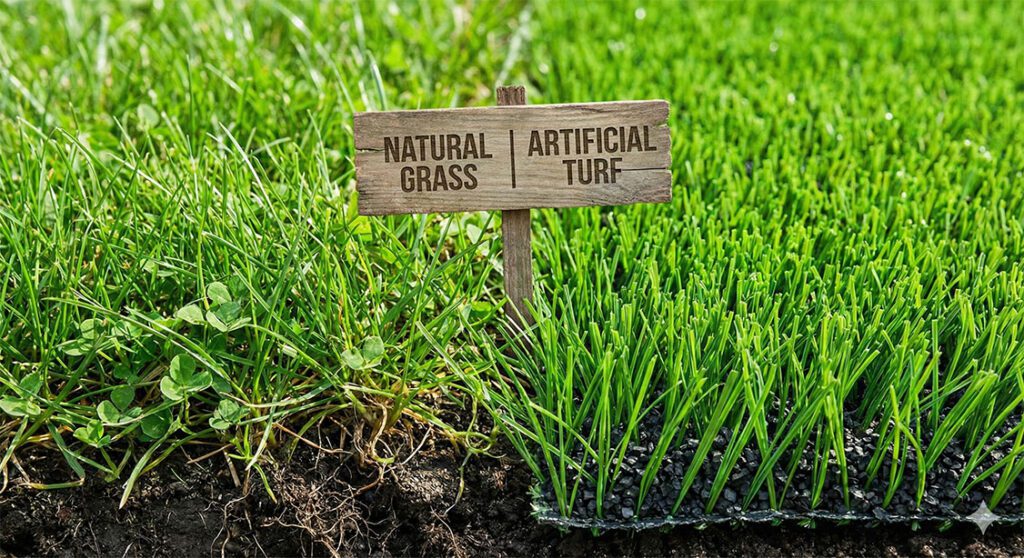
Your decision should depend on your budget, how often the field will be used, and your preference for maintenance. Artificial turf might be best if you want a field that can be used nonstop. If you want something more natural and cost-effective in the long run, natural grass could be the way to go. It’s your field, it’s your decision.
Check out why line marking with Turf Tank is beneficial for your artificial turf.
The debate over natural grass football fields versus artificial turf is gaining more attention, especially with the 2026 FIFA World Cup requiring all games to be played on natural grass or hybrid grass. Currently, the 30 NFL stadium fields are evenly split: 15 stadiums feature real grass, while the other 15 use turf. With this even split, the choice between natural grass football fields and turf remains an important topic as teams consider safety, performance, and maintenance.
Both Texan NFL teams play on artificial turf, while only two teams, the Green Bay Packers and Denver Broncos, use a hybrid system called Desso GrassMaster, which combines real grass with artificial fibers.
WHAT NFL STADIUMS HAVE REAL GRASS?
| STADIUM | GRASS TYPE |
|---|---|
| Acrisure Stadium | Desso GrassMaster / Kentucky bluegrass system |
| Allegiant Stadium | Bermuda grass on a roll-in tray system |
| Arrowhead Stadium | NorthBridge Bermudagrass |
| Empower Field at Mile High | Kentucky bluegrass |
| FirstEnergy Stadium | Kentucky bluegrass |
| FedEx Field | Bermuda grass |
| HardRock Stadium | Tifway 419 Bermudagrass |
| Lambeau Field | Kentucky bluegrass or similar cool-season mix |
| Levi’s Stadium | Bermuda grass with occasional ryegrass overseed/mixture |
| Lincoln Financial Field | HERO Hybrid Grass |
| M&T Bank Stadium | Tifway 419 Bermudagrass |
| Raymond James Stadium | Bermuda grass |
| Soldier Field | Kentucky bluegrass |
| State Farm Stadium | Bermuda grass |
| TIAA Bank Field | Bermuda grass |
Taking care of a natural grass field involves mowing, fertilizing, watering, aerating, overseeding, and regular upkeep. These simple steps can keep a natural grass athletic field looking great and ready for play all season.
Mowing is one of the most important tasks in athletic field maintenance to keep the turf healthy and game-ready. Mowing once or twice a week is enough for most fields cut at a height of 2.0 to 2.5 inches. However, during periods of fast growth—like after spring rain or fertilization—you may need to mow up to three times a week, especially for sport fields like soccer or baseball that often require shorter grass heights below 1.5 inches.
Professional teams, like the NFL, mow their natural grass fields 3-5 times a week, but we know that’s not realistic for most facilities. So, how often you should mow your field depends on several key factors.
| GRASS TYPE | HEIGHT |
|---|---|
| Bermudagrass | ¾ to 1 ¾ inches |
| Kentucky bluegrass, ryegrass & tall fescue | 1 ½ to 3 inches |
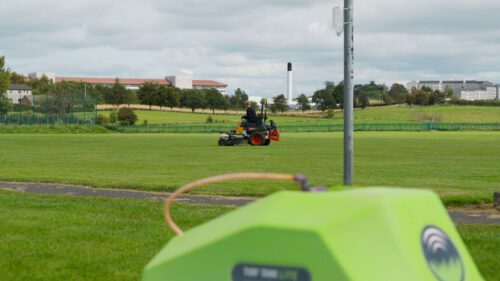
The more often you mow, the more frequently you’ll need to repaint the lines to keep them crisp and visible. That’s where an autonomous line marking robot makes all the difference—keeping your fields game-ready without the extra workload. Once you decide on a mowing height at the start of the season, stick with it. Consistency is key to achieving the best results in athletic field maintenance.
Take care of your turf with soil testing, which should be done every 2-3 years. The test will tell you how much of the three main nutrients, nitrogen, phosphorus (phosphate), and potassium (potash), are in the soil. If the soil already has higher nutrient levels, you won’t need as much fertilizer.
Fertilizer bags have three numbers on the label showing each nutrient’s percentage. For example, a fertilizer labeled 15-10-5 means it has 15% nitrogen, 10% phosphate, and 5% potash. The soil test will also give recommendations for how much fertilizer to use, usually in pounds of nitrogen per 1,000 square feet. You can then use this information along with the fertilizer label to figure out how much product you need.
The right time to fertilize depends on the type of grass and the season:
After applying fertilizer, water the turf as soon as possible to help it soak in. Proper irrigation leads to the next step in keeping your turf healthy.
Turf in high-traffic areas like goal creases, field centers, and penalty kick spots naturally wears out over the season. To keep these areas in good shape, it’s important to overseed them before they start thinning and to continue overseeding throughout the playing season whenever you notice wear. If the turf completely wears away, it’s much harder to fix, so starting early is the key here.
Overseeding is simple and can be done with a rotary spreader before games or practices. The seed gets pressed into the soil by players’ cleats during play, which helps it grow.
Perennial ryegrass is the best option for overseeding high-traffic areas. It germinates quickly, even in cooler temperatures, making it ideal for fall and early spring overseeding.
Using the right amount of seed is critical for overseeding to work. For example, overseed the area between the hash marks of a football field with a perennial ryegrass blend at a rate of 6 pounds per 1,000 square feet before every home game. This will require about 96 pounds of seed or two 50-pound bags. If you notice the turf isn’t recovering well after several games, increase the overseeding rate by adding another 50-pound bag.
Overseeding is an essential step in maintaining natural grass fields. Regularly overseeding high-wear areas with perennial ryegrass can keep your field looking great and ready for play all season long.
When it comes to watering your athletic field, the two main questions are “how much” and “when.” But unlike fertilizer, irrigation is a bit trickier because the environment doesn’t follow your schedule. Rain can add water unexpectedly; therefore, planning carefully is important.
The way water is applied to your field makes a big difference. If it is applied faster than the soil can absorb it, it will be wasted. That’s why it is essential to have a system to control and monitor water use.
The amount of water needed depends on three things:
The goal is to water deeply enough to wet the entire root zone. A good rule of thumb is to water only when the turf starts to wilt. You can tell your grass is dry if it looks bluish-gray or if footprints remain visible after you walk on it.
Whenever possible, water your field in the morning. This helps prevent disease by giving the grass time to dry before evening. Avoid watering right before the field is used heavily, as this can cause soil compaction and damage the grass.
One of the most common watering mistakes is watering too often but not deeply enough. Light watering doesn’t reach the roots, leaving the grass weak and more likely to dry out. You’ll keep your field strong and healthy by watering deeply and only when needed. With careful planning and the right irrigation system, you can ensure your field gets the water it needs without wasting resources.
Aeration is an important part of caring for natural turf athletic fields, even though it’s often overlooked. It helps prevent soil from becoming compacted and allows air, water, and nutrients to reach the grassroots. To keep your field in good shape, you should aerate it 4-8 times during the main playing season, especially in high-traffic spots like soccer goal areas and the middle of football fields.
There are different tools you can use for aeration. Most fields use tractor-pulled machines, but smaller, walk-behind machines work too. Some aerators use the weight of the machine to push tines into the ground, while others use mechanical or hydraulic systems to push the tines deeper.
You’ll also need to choose between solid or hollow tines. Hollow tines are best for soil-based fields, while solid tines work better on sand-based fields. Whatever type you choose, the tines should be at least half an inch wide and go 2-4 inches deep. For the best results, aim to punch 20-40 holes per square foot.
ADDITIONAL TIPS FOR MAINTAINING SPORTS FIELDS
By following these steps, you’ll ensure your field is always in top condition, providing a great experience for athletes and spectators.
Turf Tank helps organizations all around the world save time and money painting their fields.

